
How to Prepare Your Apartment Balcony for Fall and Winter in Canada
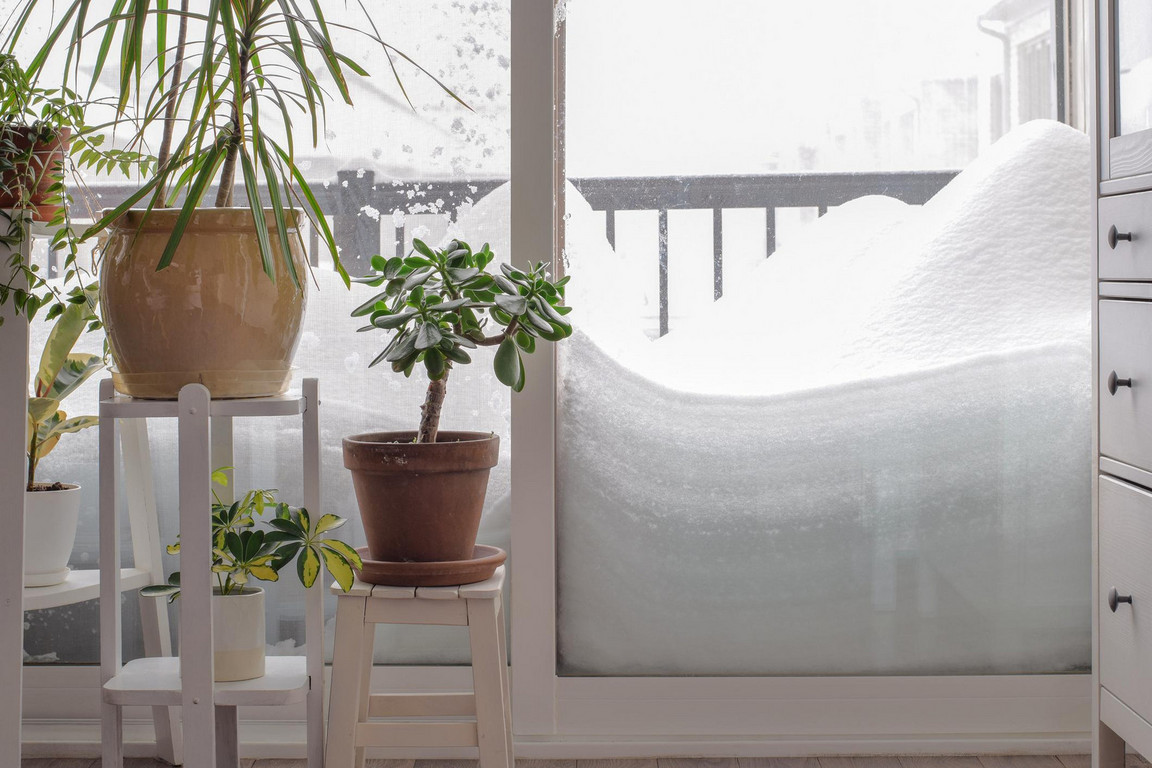
In Canada, it can feel like you go from enjoying your balcony to watching the first snow fall in no time. If this is your first rental with a balcony, you might be wondering what actually needs to come inside and what can wait until spring.
The good news is that you don’t need a big project. Spending a little time on your balcony while the weather is still mild can protect the things you want to use next year and save you from uncovering a soggy mess when the snow melts. Here’s where to start.
Clean Up
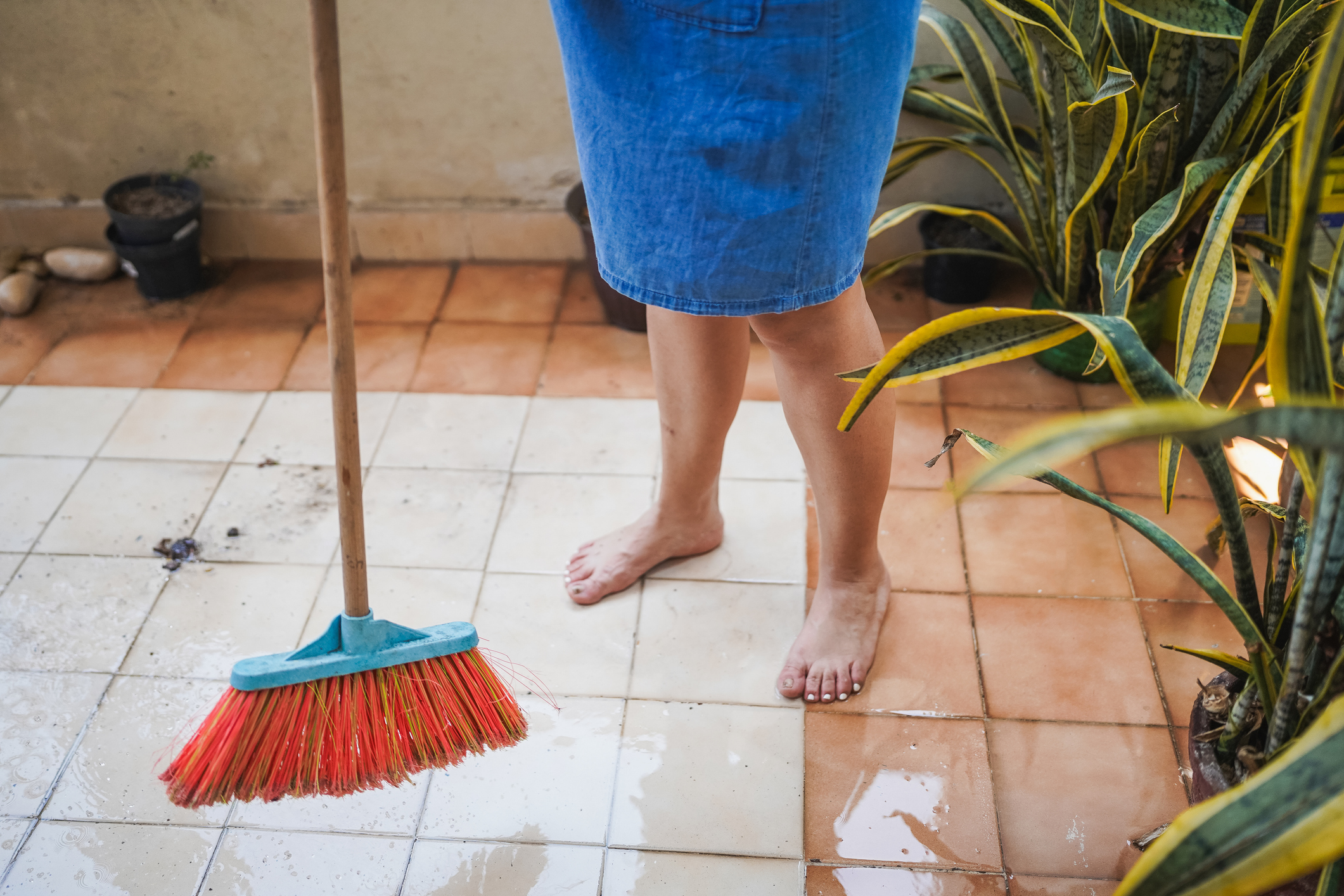
Photo Credit: Ivan Munoz Colorado
First, take a look at what’s out there. Throw away anything you no longer need and bring in items that shouldn’t spend the winter outside. Then sweep up the leaves, dirt, and loose soil. It might be tempting to leave them until spring, but once they get wet and sit under snow, they can stick to the floor and leave stains. Future you will appreciate having less to clean up.
If you want to wash the floor, try a Swiffer or another lightly damp mop. It gets the job done without sending a bucket of dirty water over the edge and onto your downstairs neighbours. Use only a little water, especially if temperatures are close to freezing. While you’re tidying, check that leaves and planters aren’t covering a drain. Meltwater needs somewhere to go, and a blocked drain can leave water pooling on your balcony. If you notice a blockage you can’t safely clear, let your property management team know.
Once the floor is done and everything is out of the way, give your balcony door and any windows you can safely reach a clean. Fall is a sweet spot: it’s usually warm enough that your cleaning supplies won’t freeze, but cool enough that you’re not sweating through the job. Plus, you’ll have clean windows to look through all winter. Stay inside the railing, and leave any glass you’d have to lean out to reach alone.
Plants & Planters
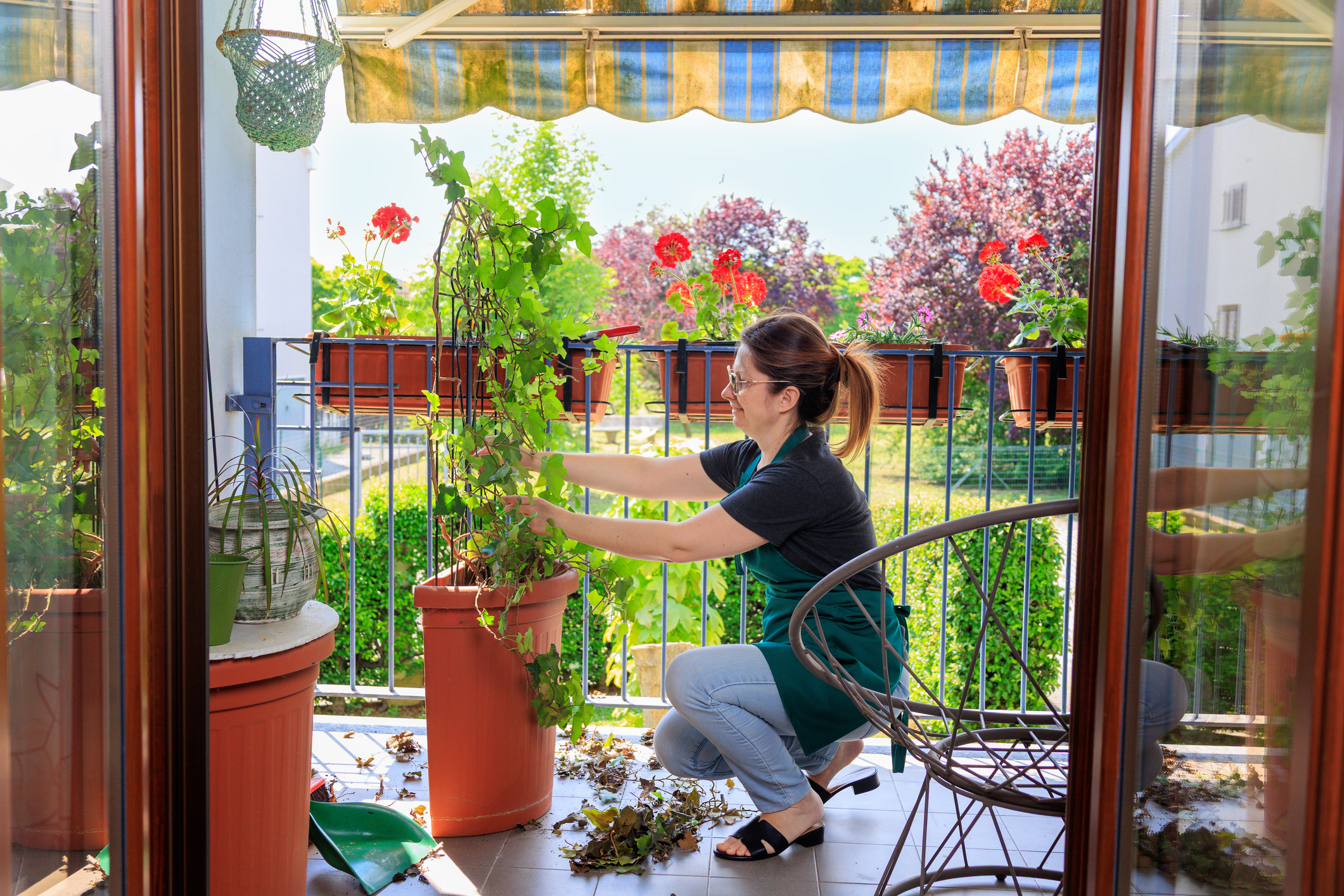
Photo Credit: Irina Giblova
If you spent the summer turning your balcony into a little garden, don’t wait for the first hard frost to decide what to do with it. Bring in the plants you want to keep, checking them for insects before they come indoors. Remove seasonal plants that won’t survive the winter, then empty and clean their planters. Otherwise, water left inside a pot can freeze and cause it to crack.
You can stack sturdy empty planters or group them in one spot and secure a cover over them. That way, you’re less likely to find them scattered around after a windy storm, and they’ll be easy to find when planting season comes back. Bring fragile planters inside if you have the space.
Already thinking about spring? Fall is a good time to plant bulbs such as tulips. If you’re using a balcony planter, choose one that’s deep, weather-resistant, and has drainage holes. You can leave it uncovered so it receives snow and spring moisture, but keep in mind that soil in a pot can freeze much more deeply than soil in a garden bed. Ask a local garden centre what protection your bulbs will need through winter. University of Illinois Extension also has a great article about how to keep potted bulbs in a protected, cool space.
Furniture
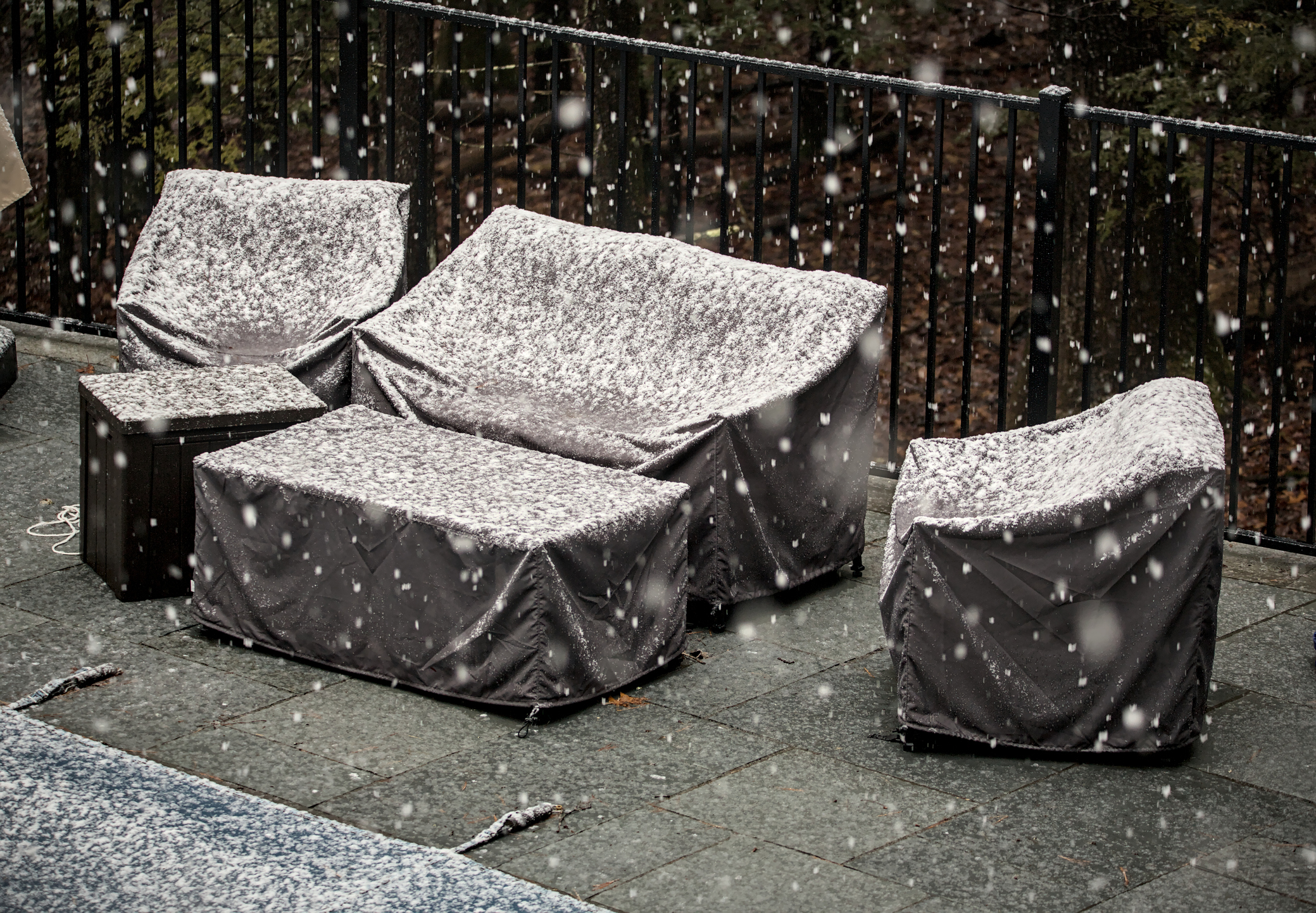
Photo Credit: Yuriy Turetskiy
Your balcony furniture might look sturdy now, but months of cold and moisture can take a toll. Wood can absorb water, some plastics become brittle in the cold, and metal can rust when moisture sits on it. Check the care instructions for your pieces and bring inside anything that isn’t meant to stay out through a Canadian winter.
For furniture that can stay, give it a clean, let it dry, and use a fitted outdoor cover. Store cushions and outdoor rugs somewhere dry if you can. It’s a bit of work now, but it’s much nicer than discovering a wet cushion or damaged chair when you’re ready to sit outside again. Secure covers and bring in lightweight décor so they don’t blow away in a storm. Leave the balcony door and drain clear and check your building’s guidelines if you’re unsure what you’re allowed to store outside.
What if there’s too much snow?
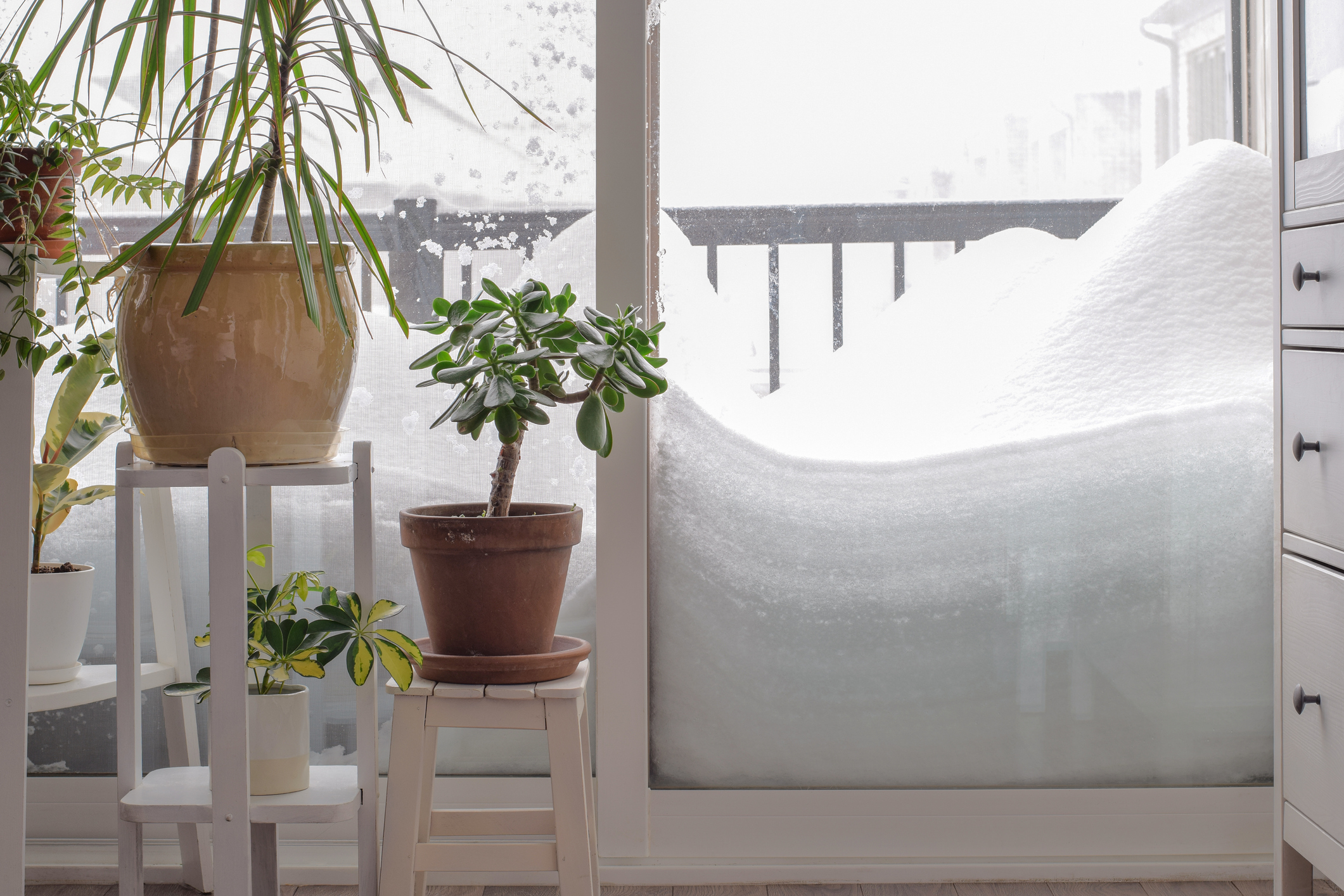
Photo Credit: JulieAlexK
Even after you’ve prepared, snow can pile up. Maybe you want to step outside on a sunny winter day, but there’s too much snow in the way. Whatever you do, don’t shovel it over the railing. It could land on a neighbour, a car, or someone walking below.
Check your building’s instructions before clearing snow yourself. If it’s permitted, a small plastic shovel or broom can help you clear a path without scraping the balcony surface. For a small amount of snow, you could scoop it into a pail, carry it inside and let it melt in the bathtub. Another option is to move a modest amount to an open part of the balcony and let it melt naturally. Keep snow away from the door and drain rather than building one large pile. The City of Toronto’s snow shovelling guidance recommends working slowly and moving small amounts at a time.
If the snow is heavy, ice has built up or water is collecting near your door, reach out to your property management team. They can tell you how your building handles it. Sometimes the safest option really is to wait for a thaw. And if you’re looking for more tips about renting in the winter, check out our blog on “How to Winterize Your Apartment.”
That’s it: a clean floor, protected plants and furniture, and a plan for the snow. Your balcony might be taking a winter break, but when spring arrives, you’ll be glad you prepared it.
Looking for a balcony to make your own? Explore Avenue Living’s available suites with balconies and book a showing to find a space you’ll love spending time in when spring returns.