
A Newcomer's Guide to Renting in Canada

When moving to a new country, there's a long to-do list to complete and figuring out where (and how) to rent an apartment is often near the top. If you’re new to Canada, the rental process might look a little different than what you’re used to, but don’t worry, we’ve got you covered. This guide will walk you through everything from choosing the right province to understanding laundry, utilities, and pet policies.
Where Should You Live?
Canada is a big country, and each province offers something a little different. Choosing where to live depends on your lifestyle, budget, job opportunities, and even how you feel about winter! Let's take a look at a few different provinces to consider.
British Columbia

Photo Credit: SMJoness
Dreaming of mountains and mild winters? British Columbia, particularly Vancouver and surrounding areas, offers stunning scenery and a vibrant lifestyle. However, it’s important to know that rent here is among the highest in Canada. Many newcomers choose B.C. for its climate and job opportunities, including agriculture, forestry, oil and gas, and construction. However, due to a higher cost of living, it's best suited to those with a higher housing budget.
The Prairie Provinces
The Prairie Provinces (Alberta, Saskatchewan, and Manitoba) are a great option for newcomers looking for affordability, job opportunities, and space to grow.
Alberta
Alberta is especially popular thanks to its strong job market — particularly in energy, construction, and tech — and relatively affordable rent compared to other provinces, with the added bonus of no provincial sales tax. Cities like Calgary and Edmonton offer a balance of urban life and outdoor adventure that appeals to people from all walks of life.
Check out these fantastic rentals in:
Calgary: Hays Farm, The Pinnacle, and Hillsboro Place
Edmonton: Avalon Court, Brook Manor, and The SunRise
Saskatchewan & Manitoba
Saskatchewan and Manitoba are known for their low cost of living and welcoming communities. Cities like Regina, Saskatoon, and Winnipeg offer affordable rental options and job opportunities in industries such as agriculture, mining, healthcare, and manufacturing.
These provinces are ideal for those looking to get established, save money, and enjoy a strong sense of community.
Check out these excellent rentals in:
Regina: Crestwood Apartments, Edinburgh Place, and Concord Apartments
Saskatoon: Reid Park Estates, The Parkway, and Ashford Manor Apartments
Winnipeg: Red River Pointe
Northern Territories

Photo Credit: Pi-Lens
Canada’s Northern Territories — Yukon, Northwest Territories, and Nunavut — are a great option if you’re interested in experiencing the beauty of nature while becoming part of a tight-knit community. Front-row views of the northern lights and long winters shape daily living here. Job opportunities are often found in government services, environmental work, and mining in these areas.
Central Canada
Ontario
Whether you’re drawn to Toronto’s fast-paced energy or Ottawa’s more laid-back vibe, there’s a strong job market across industries like finance, manufacturing, and public service. The province is incredibly diverse with residents from all over the world, so it’s easy to feel at home no matter where you’re from.
The bigger cities in Ontario can get expensive, so it’s worth planning ahead financially, so you can enjoy everything they have to offer without stress.
Quebec
If you’re looking for a place rich in culture, cuisine, and natural beauty, Quebec is a great place to be. Quebec culture is rooted in French language and heritage, offering a unique experience to residents. Montreal is known for its lively atmosphere, while Quebec City offers a more quaint, historic charm.
You’ll find employment opportunities in fields like aerospace, health sciences, and information and communication technology.
French also plays a big role in daily life and work, so embracing the language will go a long way in helping you feel connected and confident here.
The Maritimes (Nova Scotia, New Brunswick, Prince Edward Island)

Photo Credit: onepony
The Maritimes — Nova Scotia, New Brunswick, and Prince Edward Island — offer a slower pace of life, beautiful coastal scenery, and growing opportunities for newcomers.
Here, employment is often found in these key sectors: fishing, forestry, and agriculture. Prince Edward Island has a thriving potato farming industry, and Atlantic fisheries are a major part of the economy.
If you’re drawn to strong community ties and beautiful coasts, this region is an excellent fit.
Finding an Apartment That Fits Your Lifestyle
Your day-to-day needs and preferences should guide your decision when renting an apartment. For example, if you’re moving in with a pet, it’s important to prioritize pet-friendly living.
Many pet-friendly apartments have requirements like one-time pet deposits, monthly pet fees, and specific size or breed restrictions. Asking about these policies upfront is always a smart move, as it helps you avoid surprises later and ensures the space is a comfortable fit for both you and your pet.
Property Management Company vs. Private Landlord

Photo Credit: fizkes
When renting in Canada, you’ll usually choose between a property management company and a private landlord.
Property management companies like Avenue Living offer a more professional and reliable experience, with dedicated teams to handle maintenance requests and provide consistent support. Many also have clear policies and systems in place, making the rental process easier to navigate. You can learn more about this in Why renting with Avenue Living means care and comfort and The benefits of professional property management.
Private landlords are individual property owners who may offer more flexibility in lease terms or arrangements. However, because they manage properties independently, the level of communication and responsiveness can vary.
No matter which option you choose, it’s important to stay alert for rental scams. Avoid sending money before viewing a property, double-check listing details, and be cautious of deals that seem too good to be true. For more tips, check out How to avoid rental scams as a renter.
Requirements to Rent an Apartment

Photo Credit: AntonioGuillem
When you apply for a rental at Avenue Living, you’ll need to show a few key documents to confirm your identity and that you can afford to rent the suite.
First, you’ll need to show one piece of government-issued photo ID, such as a driver’s license or passport. Then you’ll need proof of income — this could be recent pay stubs, bank statements showing deposits, or a letter from your employer if you’re working.
If you’re self-employed, you’ll typically submit your latest tax return, while students, retirees, or those on income support can provide documentation that shows what they receive and how long it’ll last. You can also use savings or student loan info to support your application if needed.
Your Home Address
Once you move into your new apartment, your address will include both the building address and your specific suite number. If you’re unsure how to format it correctly, don’t worry; it’s a common question for newcomers. You can check out How to add an apartment number to an address for a simple breakdown, so your mail arrives without any issues. Proof of address is required for many things in Canada, such as accessing government and banking services, obtaining a driver’s license or health card, setting up utilities, and more.
If you have children, your home address can also impact which school your child will attend. In most cities, schools serve a defined area of the map, attending a school outside of the district’s boundaries can affect whether your children are eligible for school services like after care programs and school bus transportation.
Utilities: What’s Included?
Utilities are another important factor to consider when renting.
In Canada, utilities generally mean heat, water, and electricity.
Some apartments include certain utilities in the monthly rent, while others require you to set them up and pay separately. Understanding what’s covered ahead of time can help you budget more accurately.
For a deeper dive on this topic, check out What You Need to Know About Utilities When Moving.
Basement Apartments
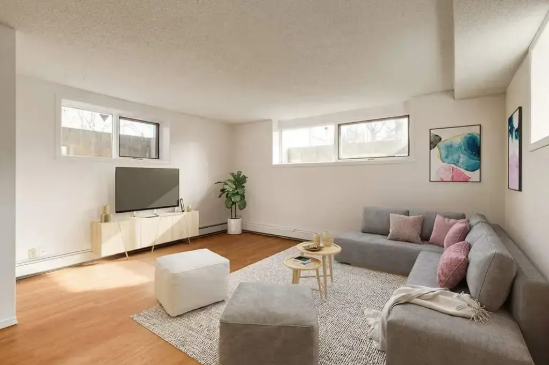
Photo Credit: Avenue Living
Basement apartments are a common rental option across many Canadian cities and are often one of the most affordable choices for newcomers. Located on the lower level of a house, these suites are typically partially or fully below ground, which is why they usually rent for less than above-ground units. Many basement apartments have smaller windows and receive less natural light, but the lower cost can make them an attractive option for renters looking to save money.
For families with young children, basement suites can be especially appealing. Since there are no neighbours living below you, there’s less worry about everyday noise, running, or playtime disturbing others. This can make for a more relaxed living experience.
Another advantage is that basement apartments often offer some of the benefits of living in a house without the higher rental price. Depending on your lease agreement, you may have access to shared amenities such as laundry facilities, storage space, or a backyard. Some basement suites also have their own private entrance, providing added convenience and privacy.
For many people moving to Canada, a basement apartment can be a practical, comfortable, and budget-friendly place to start while getting settled in a new city.
Laundry: What to Expect

Photo Credit: Nestor Martinez Nieva
When searching for a rental in Canada, laundry is an important feature to consider. Your household size, lifestyle, and schedule can all affect which setup works best for you. For example, families with children or anyone who does multiple loads of laundry each week may find in-suite laundry more convenient, while others may be comfortable using shared facilities.
Here are two common laundry setups you'll come across:
In-Suite Laundry: A washer and dryer located inside your apartment. This option offers the most convenience, allowing you to do laundry whenever it fits your schedule without leaving your suite.
Shared Laundry: Washer and dryer machines located in a shared laundry room within the building. These machines may require coins, a prepaid card, or a mobile payment app, depending on the property.
If you're using shared laundry facilities, it's helpful to be aware of common laundry room etiquette, such as removing your clothes promptly when a cycle finishes and keeping the space clean for others. For more tips, check out our guide: Clean clothes, clean conscience: mastering laundry room etiquette
Garbage & Recycling

Photo Credit: Machine Headz
In Canada, waste management is handled at the city level, so the exact rules can vary by city. However, most communities follow a similar three-stream system: garbage, recycling, and compost.
Garbage (landfill): This includes items that can’t be reused, recycled, or composted, such as certain plastics, broken items, or heavily contaminated materials.
Recycling: Recyclable materials like paper, cardboard, glass bottles, metal cans, and many plastics, are sorted into blue bins or carts. Most cities encourage residents to rinse containers and follow sorting guidelines to prevent contamination.
Compost (organics): Many Canadian cities also offer green bin programs for food scraps, yard waste, and other biodegradable materials. This includes things like fruit peels, coffee grounds, eggshells, and sometimes even small amounts of paper or compostable packaging. These materials are sent to composting or anaerobic digestion facilities, where they break down into nutrient-rich soil or produce energy.
We encourage you to follow your local guidelines as best you can — it helps keep more waste out of landfills and supports a more sustainable system overall. Most apartment buildings have large garbage bins that are always available to you, so you never have to worry about missing collection day. Placing your items inside the right bin and disposing of your garbage promptly to prevent odours and pests is common etiquette in Canadian apartment rentals.
Final Thoughts
Renting your first home in Canada as a newcomer can feel overwhelming, but it doesn’t have to be. Focus on what matters most to you, whether that’s affordability, location, or lifestyle, and take it one step at a time.
Before you know it, you’ll find a place that truly feels like home.
Looking to move soon? Browse our available rental apartments today!